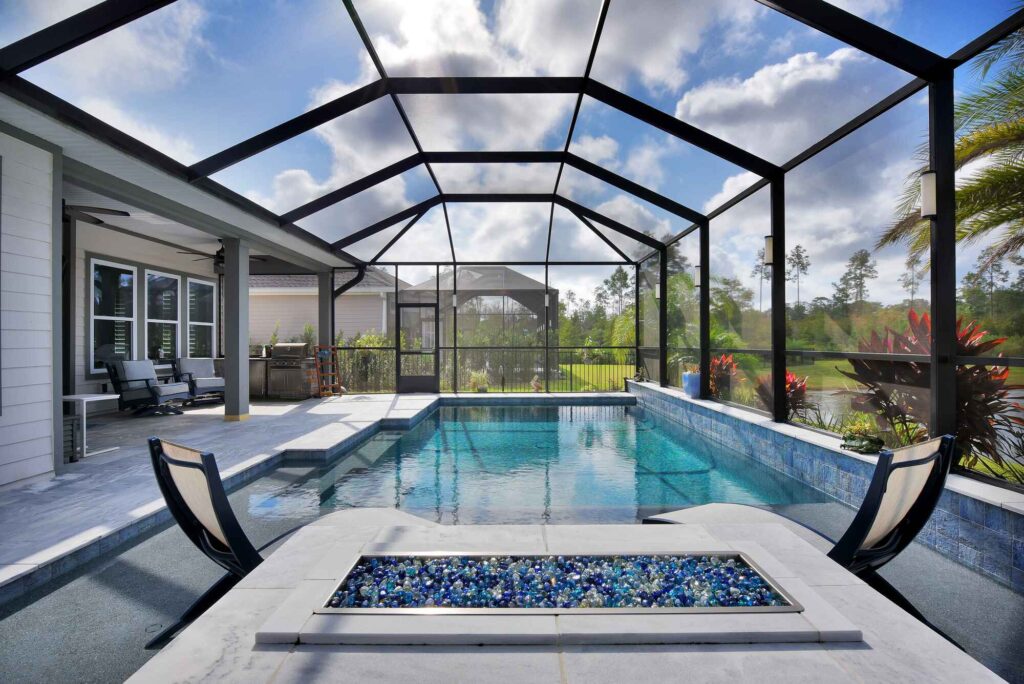
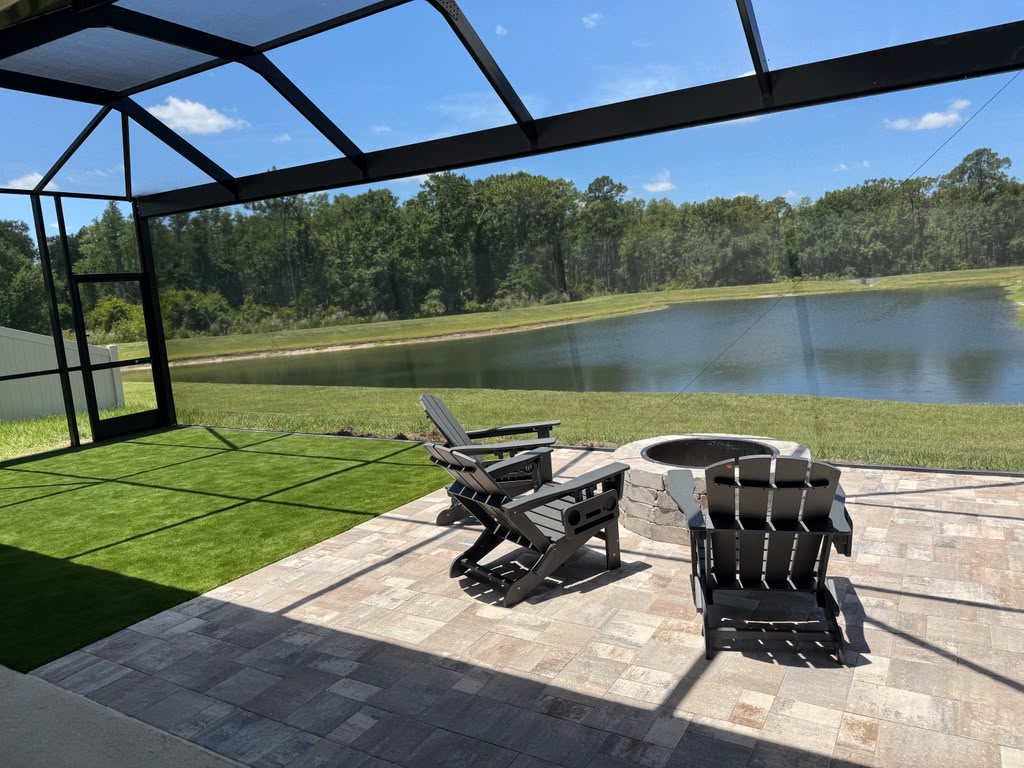
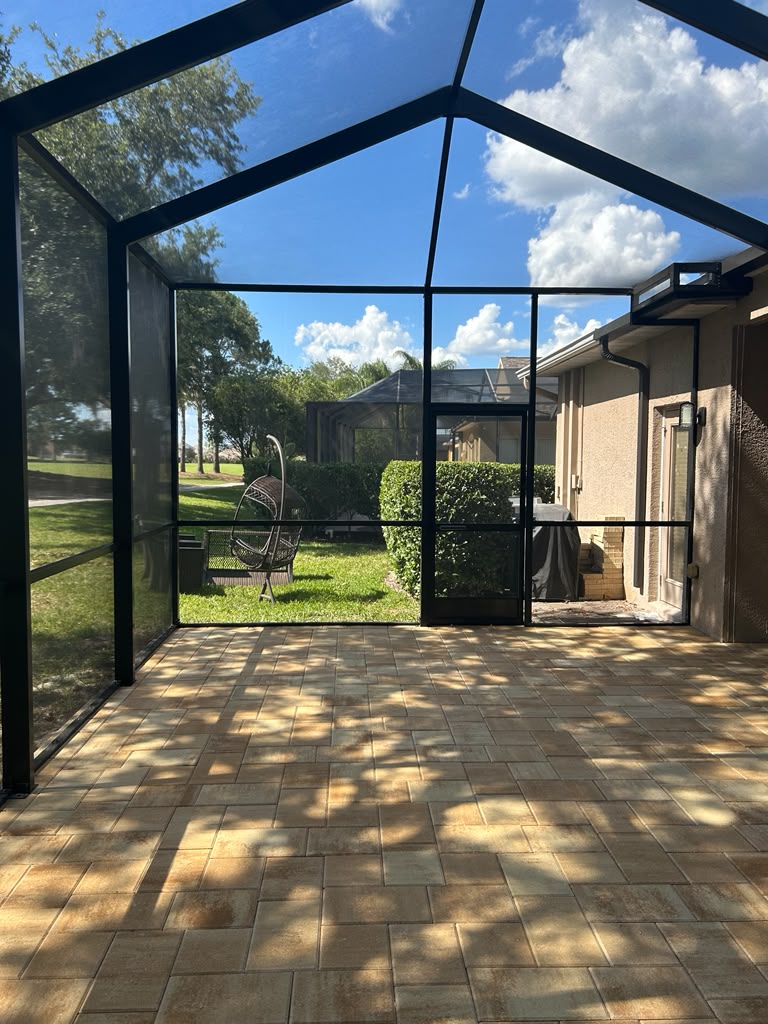
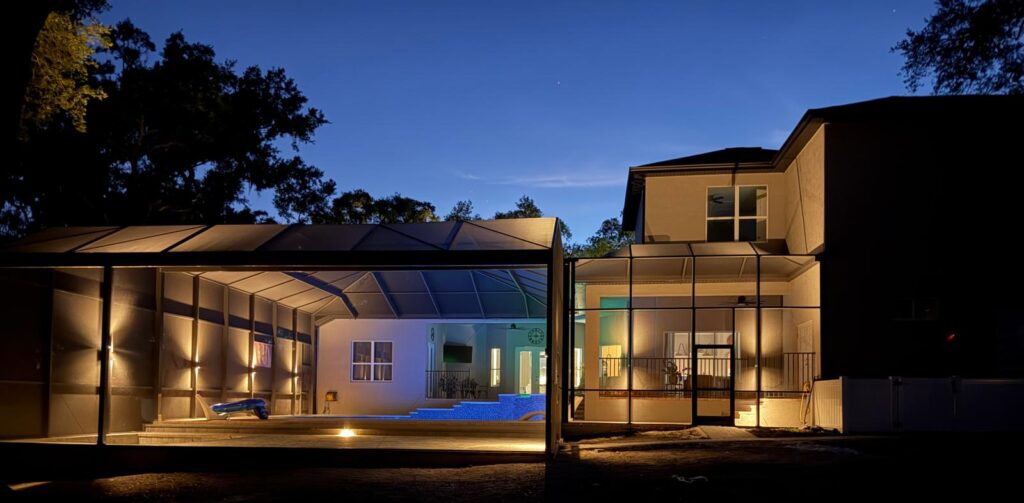
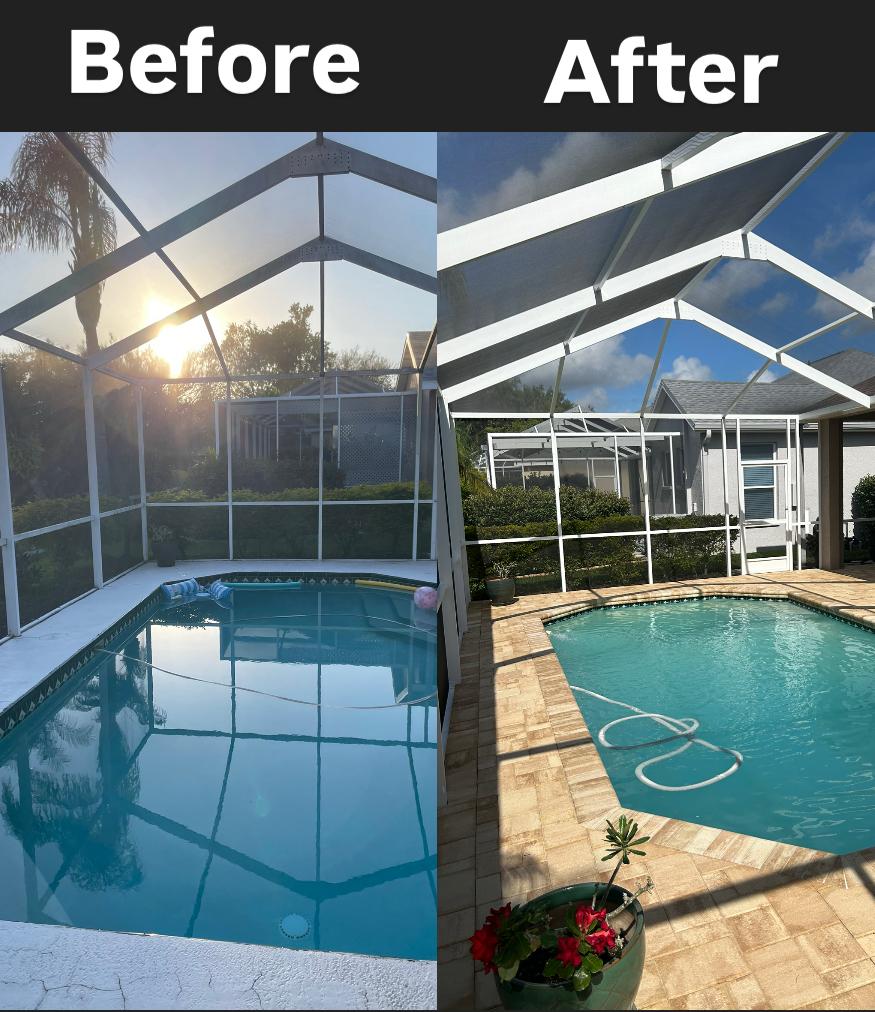
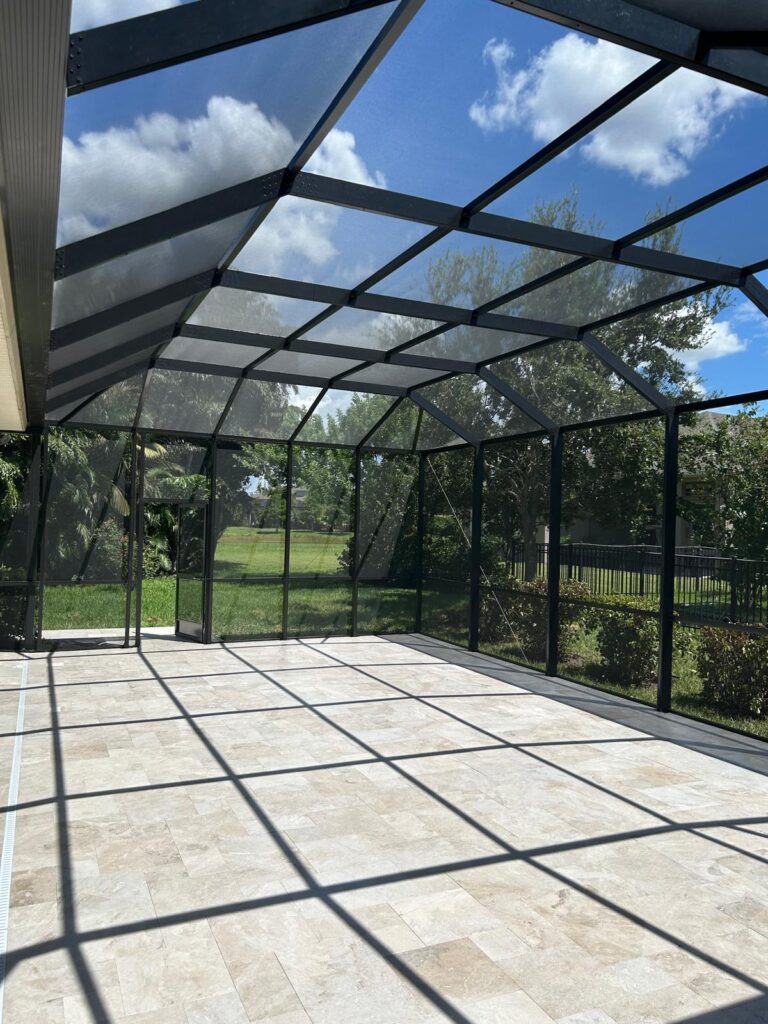
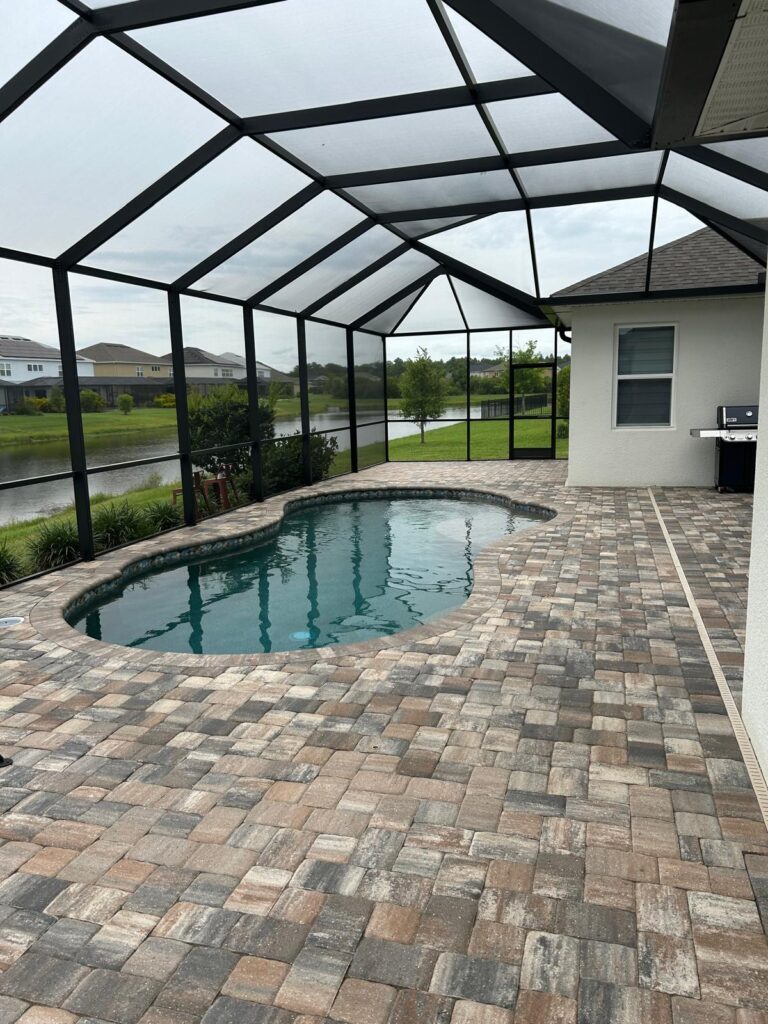
If you’re considering a screen enclosure, the first thing to think about is your purpose for it. If you use your pool just to swim laps, you won’t need a big, tall pool enclosure. On the other hand, if you regard your pool deck as an entertainment and relaxation space, you’ll want to enclose more than just your pool. Some homeowners even use their pool enclosures as sites for outdoor kitchens. Your budget and your primary use of the pool will help you decide what kind of enclosure will be best for you.
Most Florida pool screen enclosures are framed in aluminum, using stainless steel or other rust-resistant screws as fasteners. Some enclosures are wood-framed. Each material has its benefits and drawbacks, and some zoning laws may define permissible materials. Aluminum is economical, lighter-weight, and fairly easy to maintain. Wood is beautiful, but it’s also heavy, so it may present more maintenance issues with constant exposure to moisture. We’ve provided more info below about screen enclosures.
For more information on screen enclosures, screen refurbishes and screen repairs, check out our screen enclosure podcast here.
Motorized Screens – We also have the ability to do motorized screens. These are great for lanais or other smaller areas that you may want the option to have screened or open. They come in a variety of options. Contact us for more info.
Build & Price Your Project Tool
Does a pool screen add value?
A pool screen definitely adds value to your home. Here are some of the reasons why:
1) A pool screen protects your pool from leaves and other debris that can clog up the filter and make the water dirty. 2) A pool screen also keeps out bugs, which can be a huge nuisance when you’re trying to enjoy a swim. 3) Pool screens can also help to reduce evaporation, which means you won’t have to add as much water to your pool over time. 4) In addition, a pool screen can provide some extra privacy for your swimming area. 5) Finally, a pool screen can increase the resale value of your home
If a pool enclosure, lanai, or carport is tucked under an extension of the home’s roof, with the roof extending to a wall, the structure may be covered. However, if the framing of the structure is aluminum, it might not be covered.
Many insurance companies offer riders an additional cost to cover pool cages. Even if the enclosure is covered, it may be subject to a hefty deductible.
The main types of screening to choose from include:
Basic screen: This type of screening is cheaper than most other types. It’s less durable, and you may need to replace it more often.
Standard or basic fiberglass screen: An economical choice that may include extra coatings or additives for durability
Pet screen: Typically made of stronger, vinyl-coated polyester, pet screens resist clawing and intrusion from your pets.
Insect screen: This screen features a tighter weave (smaller rectangles, and more of them per square inch) to keep out even those tiny but extremely annoying “no-see-ums.”
Solar screen: Specially formulated to protect you from heat and sun glare if your pool is in an open, unshaded area. It may provide shade and resist fading, but check to see if any solar screen you’re considering also provides UV protection to pool users.
Privacy screen: Blocks the view from the outside in to provide greater privacy
View screen: Protects from insects and sunlight while providing a clearer view from the inside of the enclosure outward
Super Screen: An exceptional product made with a polyester yarn core using an extrusion process, the Super Screen has it all: the newest version is UV-protective, pet- and insect-resistant, and carcinogen-free. It won’t fade or become brittle, and in a seven-year weather test, the Super Screen lost only 1% of its tensile strength.
If you have more questions or would like to set up an on site consultation for a screen enclosure in Tampa, St. Pete, Clearwater, Lutz, Land O Lakes, Wesley Chapel, Hillsborough or Pinellas counties, contact us today!